FORZA ARCHIVE
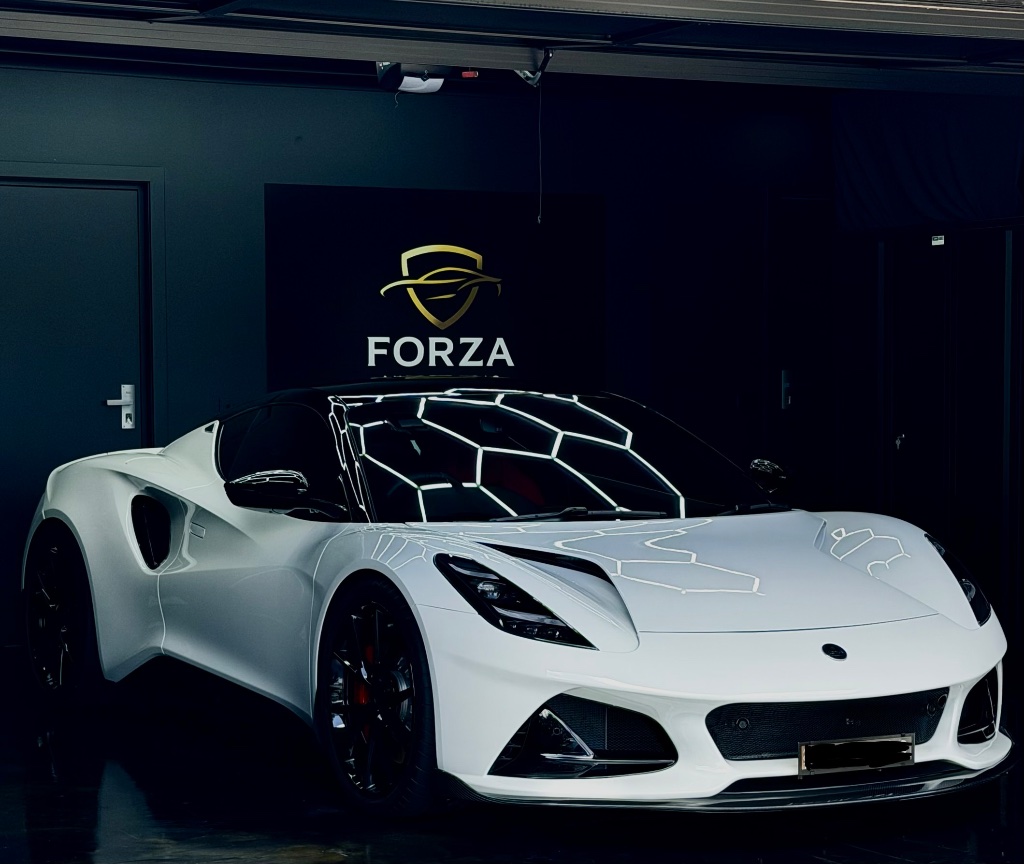
2024 Lotus Emira First Edition
A Lotus Emira First Edition, inspected before assumption.
This project was never about ceramic coating. The objective was to prepare the paint to the highest possible standard before Paint Protection Film installation — ensuring the surface beneath the film was worthy of the protection it would receive.
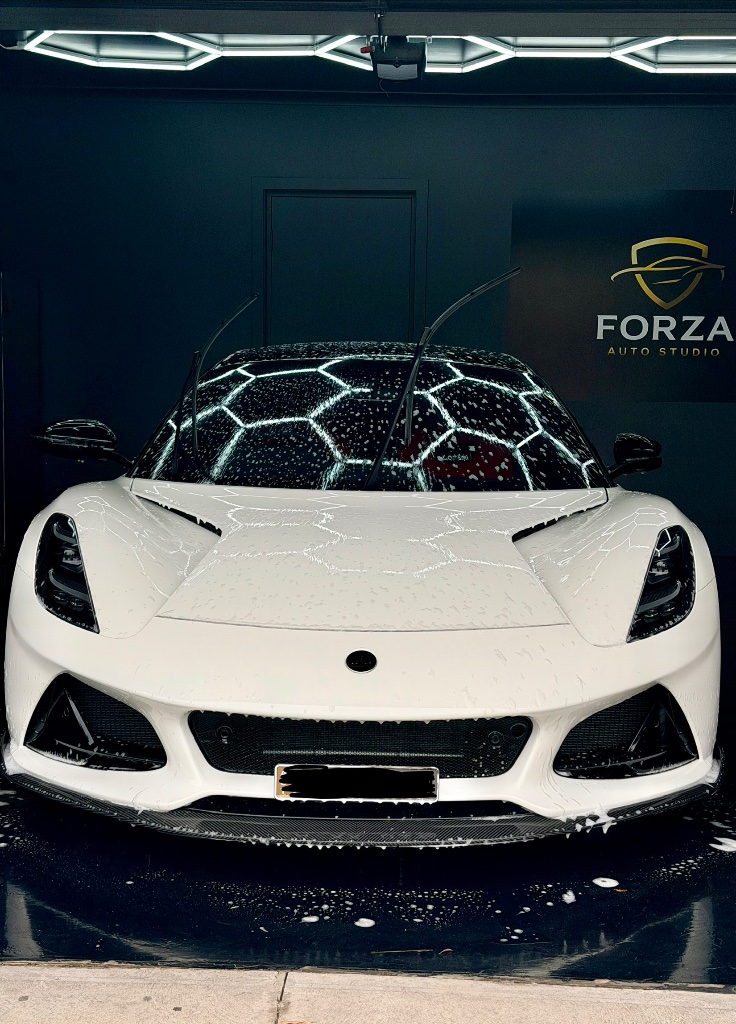
The Lotus Emira First Edition arrived at the studio brand new, delivered directly from the dealership.
The owner's intention was straightforward: prepare the paint before Paint Protection Film installation. The expectation, shared by most, was that a vehicle at this price point — well beyond $200,000 AUD — would arrive with paintwork already close to perfect.
That assumption is common. It is also, frequently, incorrect.
No criticism is directed at the dealership or the manufacturer. The Emira is a remarkable vehicle, and the path from factory to showroom to driveway involves many hands, many processes, and many opportunities for a finish to be compromised. This is simply the reality of new vehicle delivery — and the reason inspection should never be skipped.
Never Assume. Always Inspect.
What inspection lighting revealed beneath the surface would have gone unnoticed by almost anyone under normal conditions.
Under the hexagonal LED array, the paint told a different story. Fine sanding marks from factory preparation. Light swirls from dealership handling. Isolated deeper marks that suggested contact during transport or pre-delivery cleaning. None visible to the naked eye. All visible under direct, high-intensity illumination.
This is not unusual. It is, in fact, the norm. Factory paint preparation and dealership pre-delivery processes leave their marks on nearly every new vehicle — regardless of badge, regardless of price.
The Emira reinforced a principle that governs every assessment inside the studio: new vehicles deserve the same careful inspection as older vehicles. Price does not replace inspection. Assumption does not replace process.
Under inspection lighting, the paint told a different story.
Defects invisible under normal conditions — revealed.
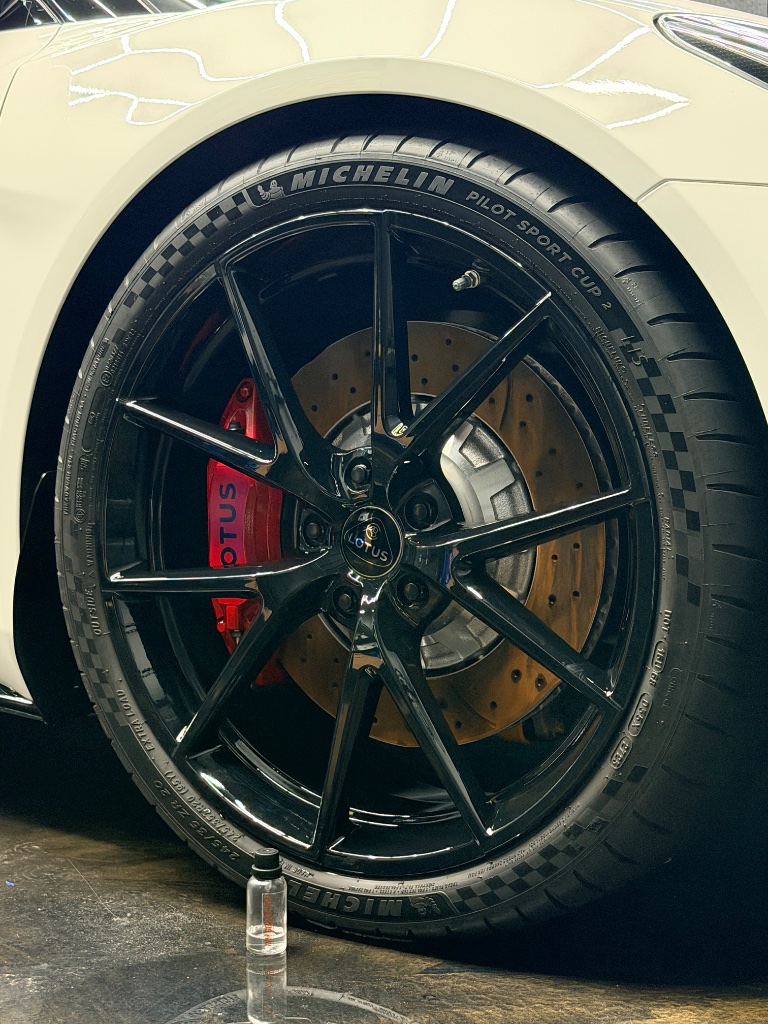
Surface contamination on a vehicle with effectively zero mileage.
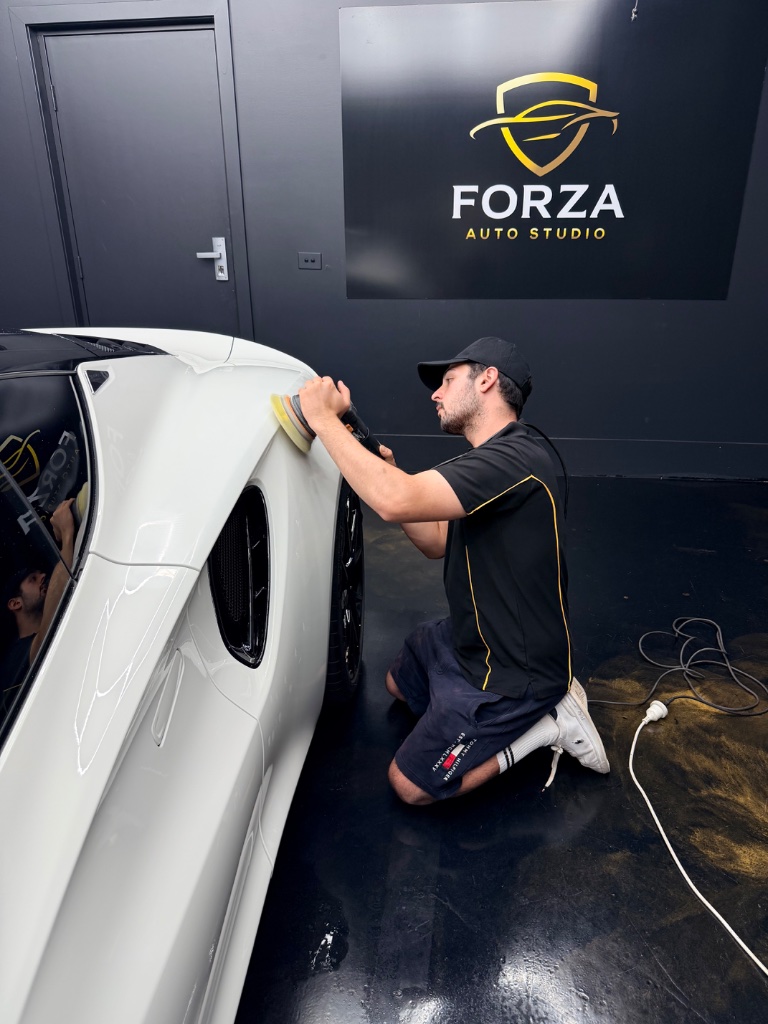
Paint Refinement
Every decision throughout the refinement process was made with one goal: creating the cleanest possible substrate for Paint Protection Film.
The process began with a safe wash and full decontamination, removing anything that could interfere with the assessment or the correction itself. Once the surface was clean, each panel was inspected individually under inspection lighting to map the defects and determine the appropriate level of refinement.
Paint refinement was carried out conservatively. The objective was not to remove every microscopic imperfection — it was to create a consistent, uniform surface that would allow the PPF to adhere flawlessly. Removing unnecessary clear coat serves no one.
Panel by panel, the finish was brought to a uniform standard. Edges and complex contours — of which the Emira has many — received particular attention, as these areas determine how cleanly film can be wrapped and how invisibly it will sit.
No coating was applied to the exterior paint. None was intended to be. The vehicle was being prepared for the next stage of its preservation, not the final one.
The inspection findings directly informed our approach to paint correction before any film could be applied.
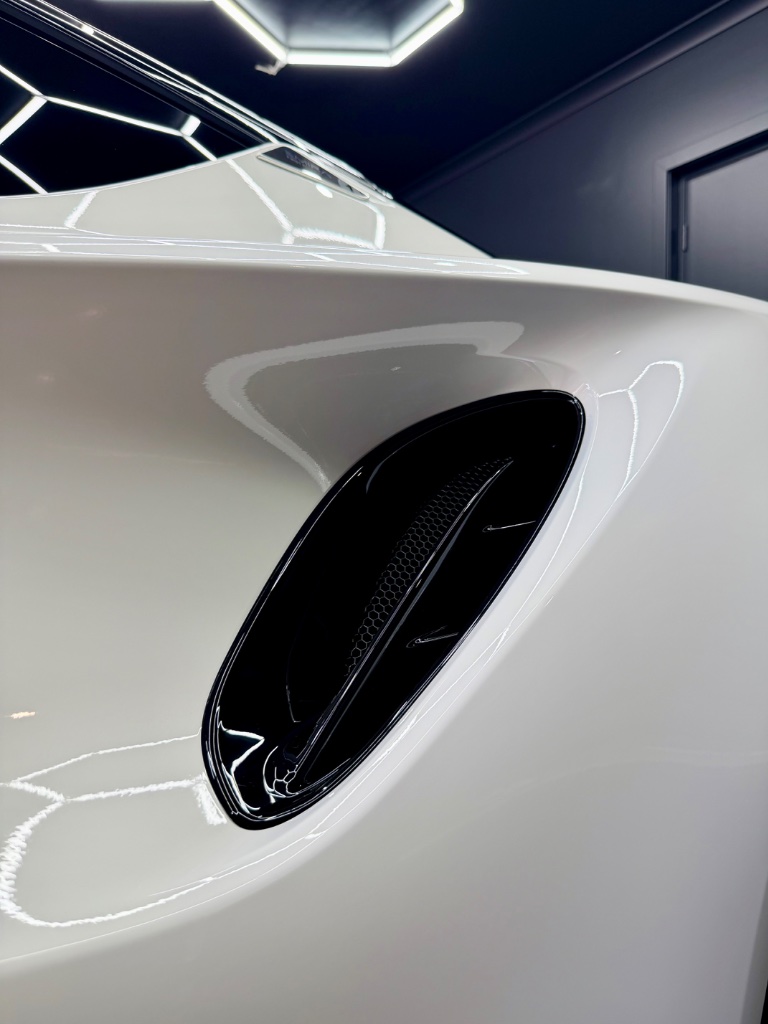
The Reasoning
The purpose of this project was never ceramic coating.
It was to ensure that the Paint Protection Film installed on this vehicle would sit atop a surface worthy of it. PPF is only as effective as the paint beneath it allows it to be. Film applied over defective paint locks those defects in place — preserving them rather than protecting against them.
Every stage of the refinement process — the inspection, the decontamination, the measured correction, the panel-by-panel consistency — was carried out to support the success of the installation that followed.
Preparation, not protection, was the objective.
Vehicle Delivery
Inspection
Paint Preparation
PPF Ready
Vehicle Sent For Paint Protection Film
The Result
The Emira left the studio prepared for the next stage of its preservation.
The paint was uniform, clean, and consistent across every panel. The surface was ready to receive Paint Protection Film — not as a compromise, but as a foundation.
The vehicle was sent directly for professional PPF installation, where the quality of the preparation beneath would determine the quality of the protection above.
Excellent PPF begins with excellent preparation. That is where this project ended.
What It Taught Us
This project permanently reinforced a simple rule inside the studio.
Never assume.
Always inspect.
The Emira's purchase price did not determine the quality of its paintwork. Its mileage — effectively zero — did not mean its finish was flawless. The badge on the bonnet did not guarantee the condition of the clear coat beneath it.
What this project taught was not new. It was a reminder that the most important work carried out on a vehicle is often the work nobody sees — the inspection that occurs before any tool touches the paint, the assessment that determines what is actually needed, and the discipline to carry out only what serves the vehicle's long-term preservation.
That lesson now shapes how every new vehicle is received, regardless of its provenance.
This archive reminds us that preparation begins long before protection.
Some of the most important work carried out on a vehicle is the work nobody ever sees — the hours spent inspecting, mapping, and refining a surface before a single piece of film is applied.
The quality of every protection system is ultimately determined by the surface beneath it.
This archive documents that surface.
Next Step
Tell us what you're working with.
Every vehicle arrives with a different condition, history and intended use. Tell us what you're driving and what you'd like to improve, and we'll recommend the work that makes sense for it.