
A new vehicle can arrive looking glossy under showroom lighting yet still benefit from specialist preparation. Dealership prep versus detailing is not simply a question of how clean the car looks on collection day. It is about the purpose of the work, the level of inspection involved and whether the paint, trim and interior have been prepared for long-term vehicle preservation.
For owners planning a ceramic coating, or those who simply want to begin ownership with clean, clear paint, understanding the difference helps set realistic expectations. A new car is not necessarily a flawless car, but nor does every new car require extensive correction. The right approach starts with inspecting the individual vehicle.
What dealership preparation is designed to do
Dealership preparation, often called pre-delivery preparation or PDI, has a practical purpose. The vehicle must be made presentable, road-ready and ready for handover. This can involve removing transport coverings and labels, washing the exterior, cleaning the interior, fitting accessories, checking fluids and tyre pressures, and completing delivery requirements.
That work is necessary, and it is performed within the realities of vehicle logistics and handover schedules. Cars may have travelled by ship, rail or transporter, sat in storage, then moved through several stages before collection. Preparation is generally focused on making the vehicle clean and presentable for delivery rather than closely refining every painted surface under dedicated lighting.
The result can look excellent at first glance. However, strong outdoor light or a paint inspection light may reveal light wash marring, swirl marks, adhesive residue, water spotting, bonded contamination or minor handling marks. Some vehicles show very little. Others have defects that are more apparent on dark colours, softer clear coats or larger flat panels such as bonnets and doors.
This is not an assumption to make from the badge, age or colour alone. It is why inspection matters.
Dealership prep versus detailing: the real distinction
Specialist detailing is an umbrella term, but at its best it is a condition-led process rather than a quick cosmetic clean. It considers what is on and within the surfaces, what defects are visible, how the vehicle will be used, and what level of improvement and protection is sensible for the owner.
A preservation-focused detail begins with a careful assessment. Paint thickness may be measured where appropriate, paintwork is examined under controlled lighting, and exterior surfaces are assessed for contamination, water marks, scratches and existing protection. Interior materials, wheels, glass and exterior plastics can also be reviewed where they form part of the brief.
The goal is not to chase an unrealistic idea of perfection. It is to restore gloss, clarity and depth safely, while preserving as much original paint as possible. On a new vehicle, this may mean a light paint enhancement to address minor defects before protection. On another vehicle, a more involved multi-stage paint correction may be justified. Sometimes, thorough decontamination and careful preparation are all that is required.
That tailored judgement is the meaningful difference. Dealership preparation is designed to complete delivery. Specialist detailing is designed to understand and improve condition.
Why preparation matters before a ceramic coating
A ceramic coating performs best when it is applied to properly prepared surfaces. Coating over traffic film, bonded contamination, oils, residue or unaddressed paint defects does not remove those issues. It preserves the surface beneath it and may make the remaining defects more noticeable once the finish is highly reflective.
Preparation usually begins with a safe exterior wash and chemical decontamination to remove deposits that normal washing does not. Depending on the vehicle, this may include iron fallout from transport and braking systems, tar contamination, mineral deposits or other bonded material. Mechanical decontamination may also be needed, but it must be selected carefully to avoid unnecessary marring.
Paint correction follows only where the inspection supports it. Polishing can reduce swirl marks, light scratches and haze while improving paint clarity and gloss enhancement. The amount of correction should always reflect paint condition, paint thickness, clear-coat behaviour and the owner’s expectations. More polishing is not automatically better if the defects are minor and the vehicle is intended for regular use.
Once the paint is clean, refined and panel-wiped where required, a professional-grade ceramic coating can be applied to the appropriate surfaces. Coatings for paint, wheels, glass and exterior plastics each have different roles. Their practical benefit is a cleaner-looking vehicle that is easier to maintain, with added resistance to the environmental grime and routine washing that a Canberra daily driver encounters.
A coating is not a substitute for washing, careful drying or sensible storage. It is a preservation tool, and its outcome depends heavily on the condition of the surface beneath it.
Common new-car scenarios
A new vehicle that has remained wrapped until collection may need less paint correction, but it still requires assessment. Transport film can protect panels while also leaving adhesive traces, and the uncovered areas may have been exposed to handling, dust or storage conditions.
A vehicle that has already been washed and prepared may present well but show fine circular marring in direct sun. In this case, a paint enhancement can often make a substantial visual difference without taking an unnecessarily aggressive approach to the clear coat.
Then there are vehicles with more obvious concerns: mineral spotting from storage, scratches around door handles, scuffing near the boot opening or heavier swirl marks across darker panels. These may benefit from targeted or multi-stage paint correction before coating. The answer depends on what can be improved safely, not on placing every car into the same package.
For a well-maintained used vehicle, the principle is much the same. A deep clean alone may improve presentation, but it will not remove paint defects. Conversely, paint correction should not be treated as the first answer when contamination, neglected protection or interior condition are the actual priorities.
What to do before collecting a new vehicle
If you are considering specialist preparation, the best time to plan it is before delivery. Ask whether the dealership can avoid adding any protection products, machine polishing or unnecessary exterior treatments before collection. This does not mean the vehicle should be handed over dirty or incomplete. It simply helps keep the paint condition clear and avoids layering products that will later need to be removed during proper preparation.
At collection, inspect the vehicle calmly in daylight if possible. Look along the panels rather than only at them, and check high-contact areas such as door cups, door edges, the rear bumper lip and boot opening. Do not expect to diagnose every paint defect in a car park, especially on metallic paint or under overcast skies. Document any delivery concerns with the dealership, then arrange a controlled inspection if the finish matters to you.
Avoid applying retail sprays, waxes or coatings before that inspection. They can mask water behaviour and temporarily fill minor defects, making the paint harder to assess accurately. Likewise, avoid automatic car washes in the early ownership period if you are aiming to preserve the finish from the outset.
Choosing the right level of detailing
The strongest result is not necessarily the most extensive service. A lightly marked new daily driver may be best served by decontamination, a conservative paint enhancement and ceramic coating protection. A dark-coloured enthusiast vehicle, or one with clear wash damage from its delivery journey, may warrant more detailed paint correction to restore the depth and clarity the owner expects.
Usage matters as much as appearance. A vehicle garaged most of the week has different preservation needs from one covering long highway kilometres, parked outdoors or regularly travelling regional roads. Wheel protection may be particularly useful for a performance car, while glass protection can assist visibility and maintenance through wet weather. The right recommendation should account for these realities rather than treating a coating as a one-size-fits-all answer.
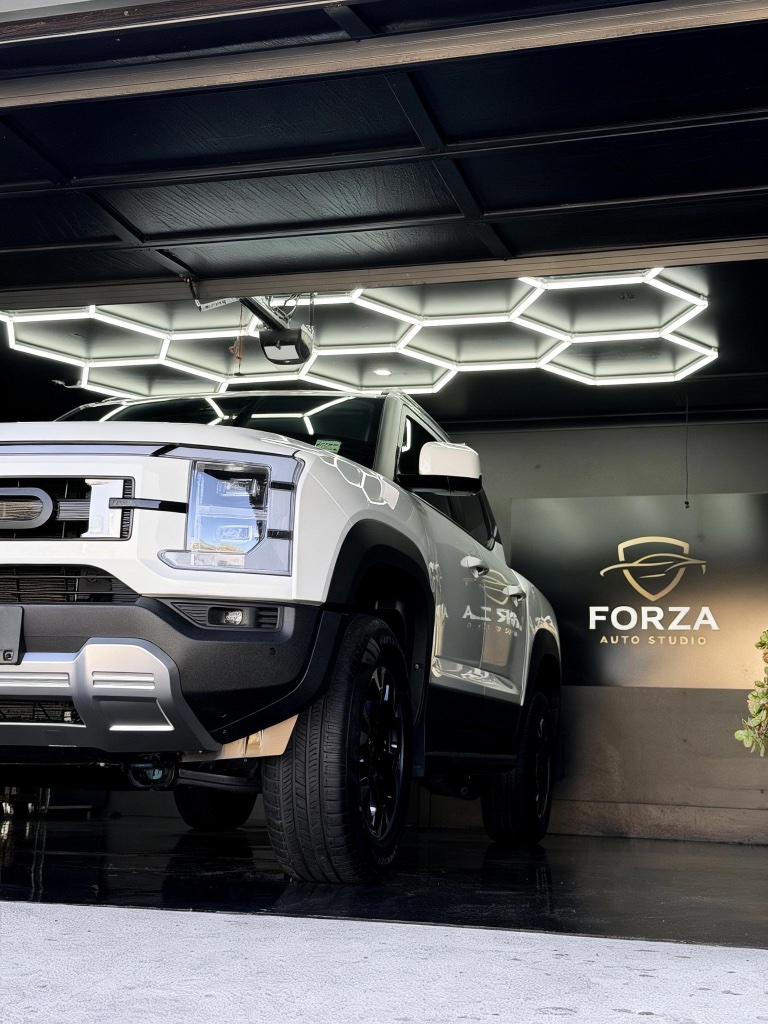
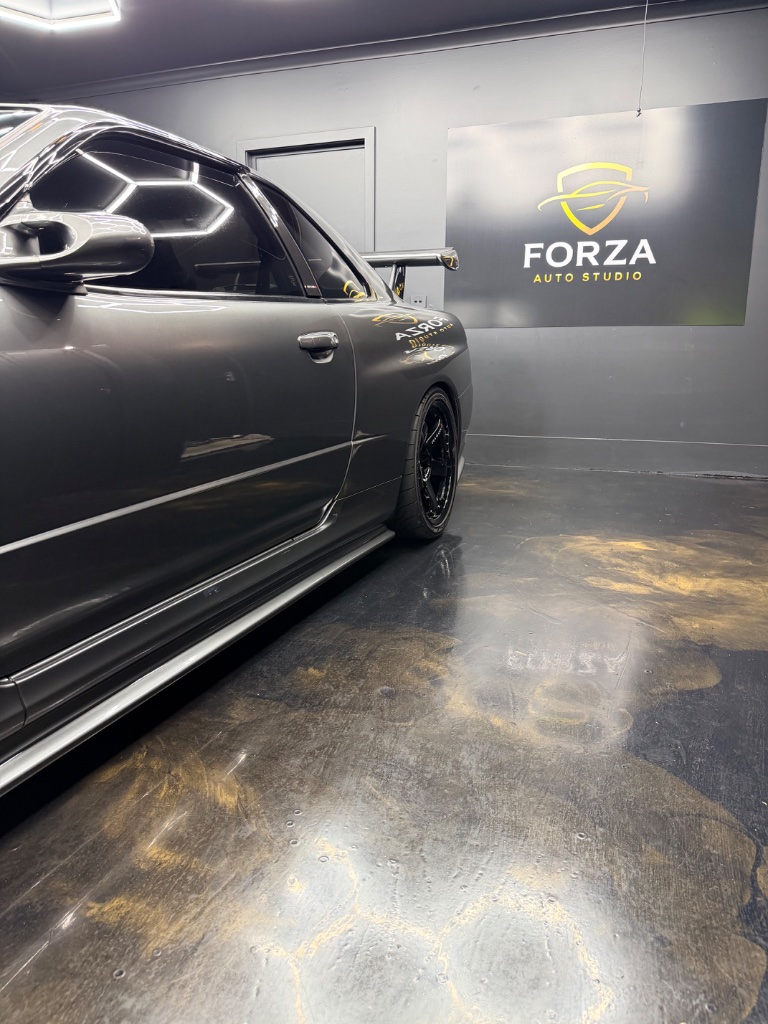
At Forza Auto Studio, PJ assesses each vehicle individually before recommending a process. The aim is straightforward: address what is genuinely present, preserve what is already good, and establish a finish that can be maintained properly over time.
After the detail: preserving the result
The quality of future washing has a direct effect on paint appearance. Even corrected and coated paint can collect fine marks if it is washed with contaminated tools, wiped while dry or subjected to harsh brush contact. Regular maintenance washing, clean wash media and careful drying will do more for retained gloss than occasional intensive treatment.
It also helps to inspect the vehicle periodically rather than waiting until the finish looks tired. Small changes in water behaviour, contamination build-up or new scratches are easier to manage when noticed early. For vehicles with ceramic coatings, specialist maintenance can keep the surfaces clean and allow the condition of the coating and paintwork to be reviewed without guesswork.
The best time to think about preservation is before the vehicle’s first regular wash becomes its first source of avoidable paint defects. Start with a clear inspection, choose only the work the vehicle needs, and maintain the result with the same care used to create it.