
A new vehicle can arrive with impressive paintwork, yet still carry light swirl marks, transport contamination, water spotting or residue from storage and delivery. Dealership preparation versus specialist preparation is not simply a choice between two places to have a car cleaned. It is a question of process, inspection time and how carefully the paint is assessed before protection is applied.
For owners who intend to keep a vehicle looking its best, the preparation stage deserves as much consideration as the ceramic coating itself. Coatings preserve the condition beneath them. They do not correct paint defects, add clarity to dull paint or conceal scratches that were present at delivery.
What dealership preparation is designed to achieve
Dealership preparation, often completed as part of the pre-delivery process, has a practical purpose. The vehicle needs to be presentable, clean and ready for handover. This may involve removing transport film, washing the exterior, cleaning the interior, fitting accessories and applying any selected protection product.
The exact process varies between dealerships, staff and the condition of each vehicle on arrival. Some vehicles are delivered in excellent condition and need only careful cleaning. Others have spent time in outdoor storage, travelled long distances or accumulated contamination during transport. A dealership may also be coordinating preparation across many vehicles, which naturally places a priority on delivery timing and consistency.
That does not make dealership preparation inherently unsuitable. For many owners, a standard pre-delivery clean is appropriate. The limitation is that it is not always structured around a detailed paint inspection, measured paint correction or a tailored preservation plan for one individual vehicle.
Why new paint still needs assessment
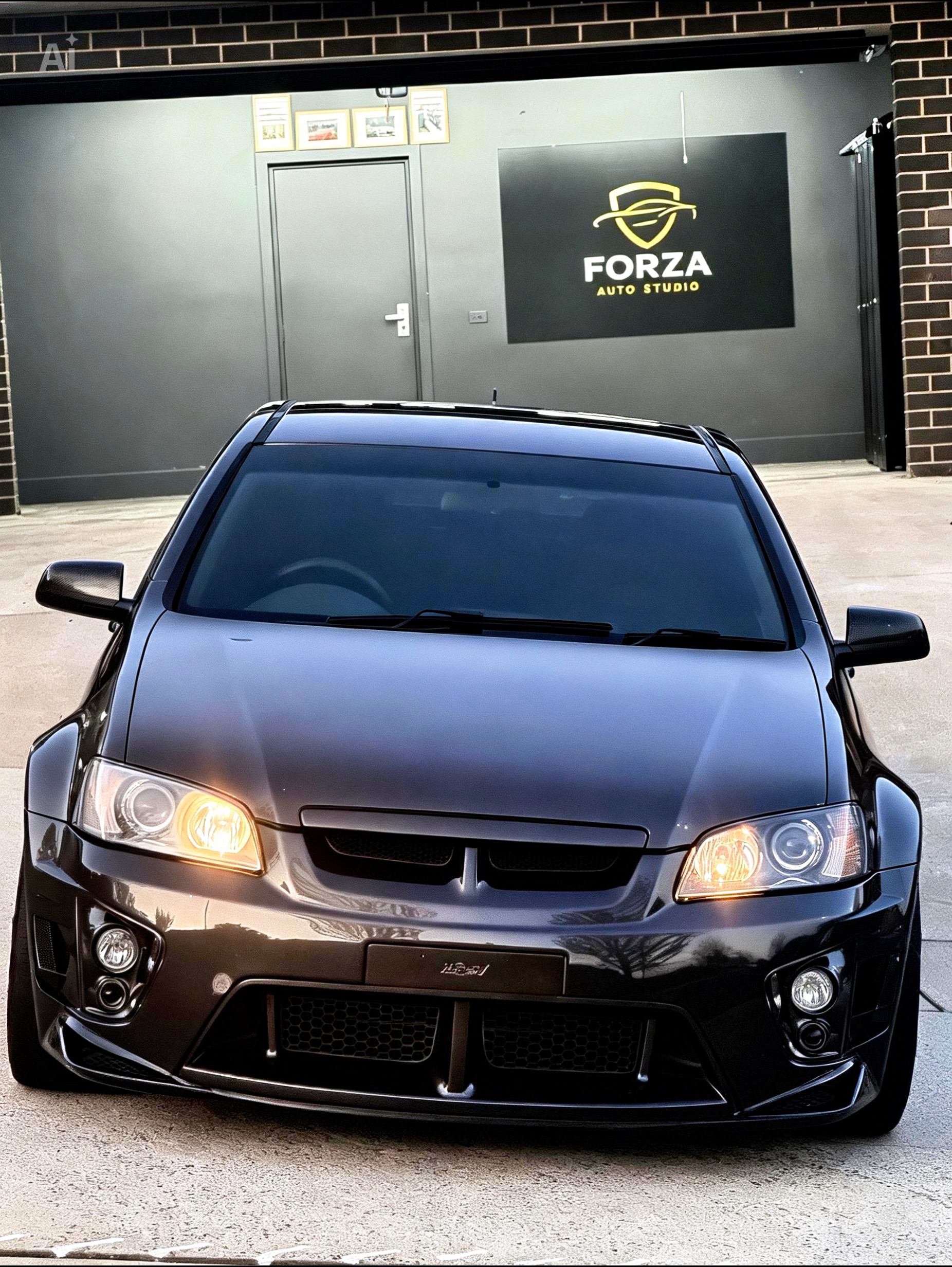
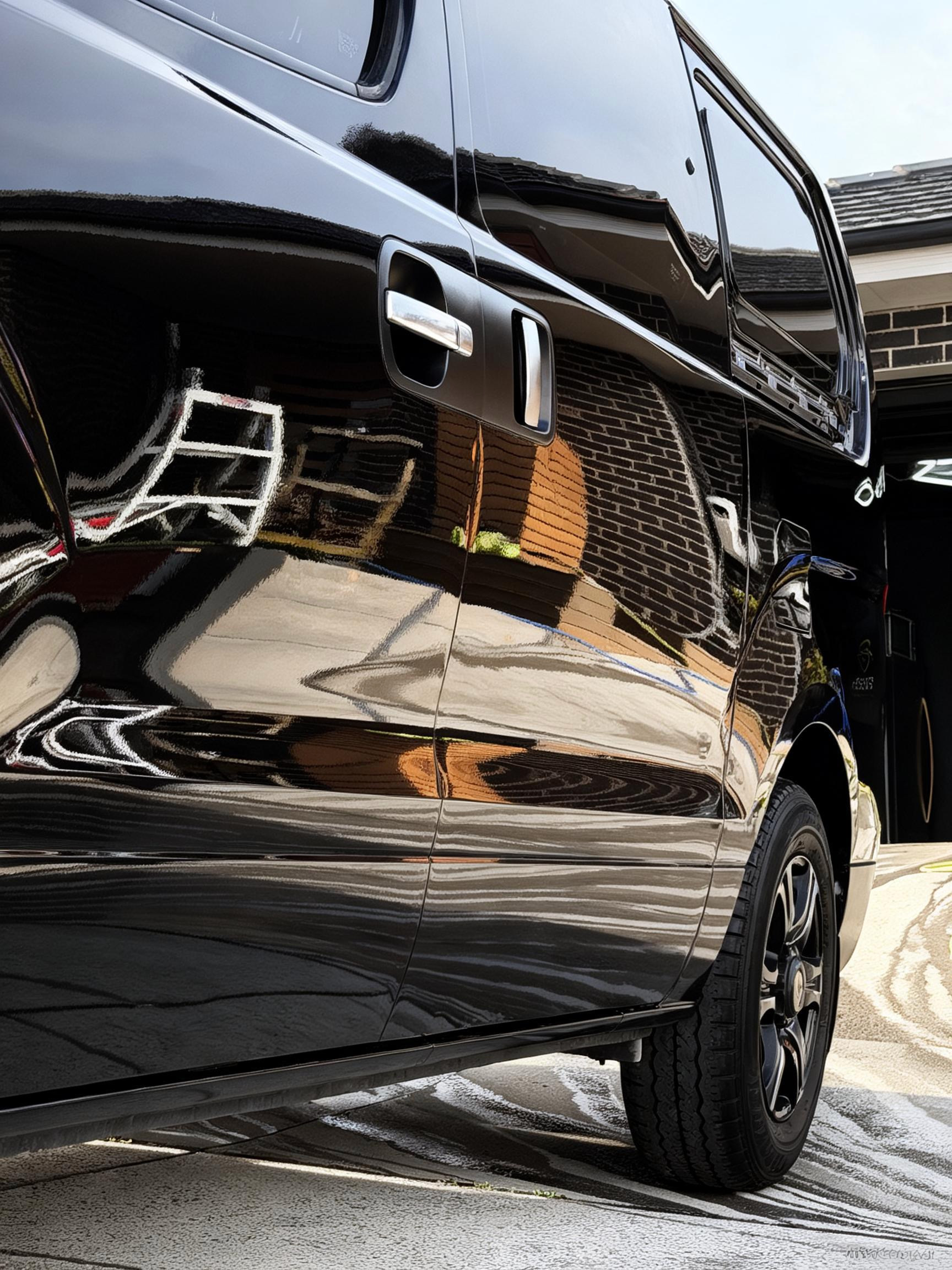
New does not necessarily mean defect-free. Modern factory paint can show light marring, dealership wash marks, adhesive residue, bonded contaminants or isolated scratches before its first owner takes delivery. Dark colours, particularly black, deep blue and metallic grey, often reveal these marks more readily in direct sunlight or under inspection lighting.
A protection product applied over those defects may improve water behaviour and cleaning ease, but it will not remove the existing visual issues. If gloss, clarity and depth matter to you, the finish should be assessed before any coating decision is made.
Dealership preparation versus specialist preparation: the practical difference
The central difference is not the label on a product bottle. It is the order of work and the level of individual attention given to the vehicle.
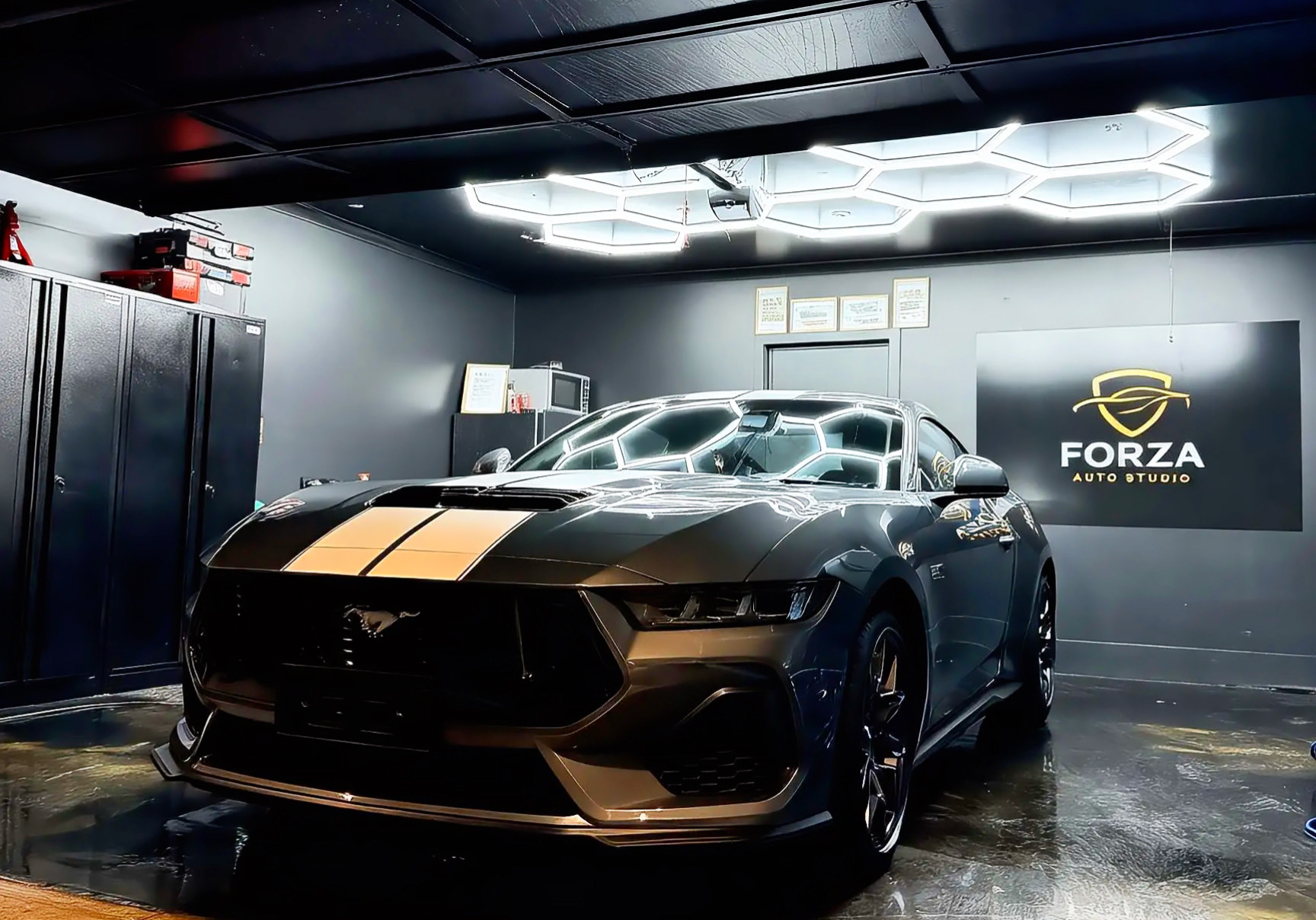
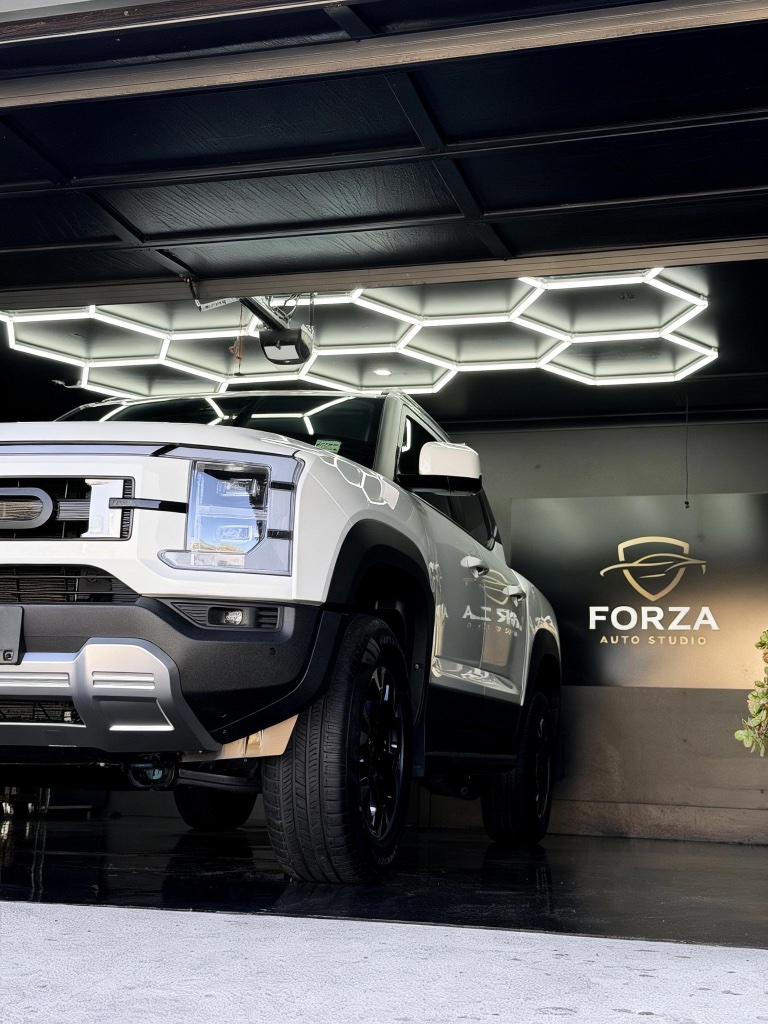
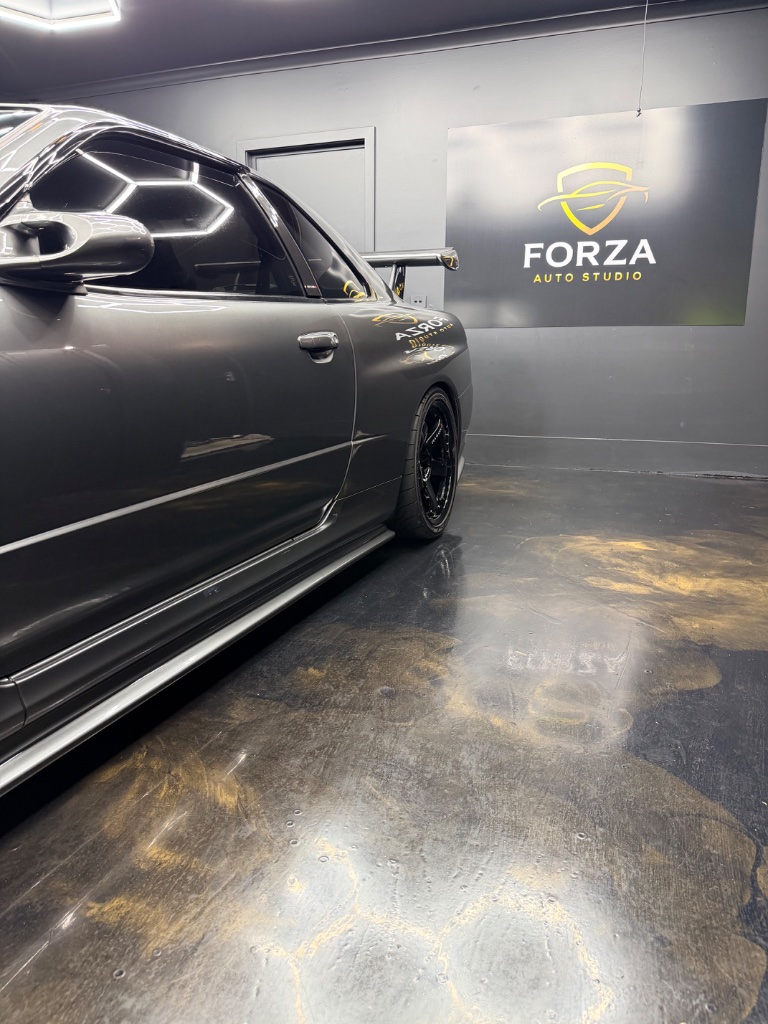
Specialist preparation begins with an inspection. At Forza Auto Studio, PJ assesses the paintwork, exterior surfaces, intended use and owner expectations before recommending a path forward. This determines whether the vehicle needs a careful enhancement, more involved paint correction, targeted defect reduction, or simply a thorough decontamination and protection process.
The vehicle is then handled as a single project rather than moving through a production sequence. That allows time to identify condition concerns that may not be obvious during a standard handover clean, such as fine wash marring around door handles, etched water spots on horizontal panels, contamination on wheels or roughness in the paint from rail dust and environmental fallout.
Preparation commonly includes a controlled wash, chemical and mechanical decontamination where appropriate, careful drying and paint inspection under dedicated lighting. If paint correction is required, the polishing approach is selected for that specific paint system and defect level. The goal is to safely improve the finish, not to pursue unnecessary correction or remove more clear coat than the vehicle requires.
Only once the paint has been refined and prepared is a ceramic coating considered. This creates a cleaner foundation for the coating to bond to and allows its gloss enhancement properties to support the work already completed.
Ceramic coating is only as good as the surface beneath it
Ceramic coating is often discussed as though it is the whole service. In practice, it is the final protective stage of a broader preparation process.
A professionally applied coating can make routine washing easier, improve resistance to everyday environmental exposure and help maintain a cleaner-looking finish between washes. It can also enhance the visual crispness of well-prepared paint. However, it cannot replace safe washing, eliminate the risk of scratches or make a vehicle maintenance-free.
The distinction matters when comparing preparation options. If a coating is applied quickly to paint that has not been properly decontaminated or inspected, it may still offer useful protection. Yet the owner may continue to see the same swirl marks, scratches and dullness that were present beforehand.
For a new car, a light paint enhancement may be all that is needed to improve clarity before coating. For a vehicle that has already been washed repeatedly, stored outdoors or used as a daily driver, a multi-stage paint correction may be more suitable. The right answer depends on the paint condition, the owner’s expectations and how the vehicle will be maintained.
When dealership preparation may be enough
Not every vehicle needs specialist paint correction before delivery. An owner who is comfortable with a standard presentation, plans to use the vehicle heavily from day one, or is not concerned by minor cosmetic marks may find dealership preparation meets their needs.
It can also be sensible where a vehicle is collected promptly and the owner intends to arrange specialist care later. In that case, it is worth asking for the paintwork to be handled conservatively before collection. Avoiding unnecessary washing or product application can leave the finish in a more straightforward condition for later inspection.
The key is making an informed choice. A standard preparation service and an inspection-led preservation process are intended to achieve different outcomes, even if both leave the vehicle looking clean on collection day.
When specialist preparation makes more sense
Specialist preparation is particularly valuable for owners who notice paint quality, want to preserve a new vehicle from the outset, or are purchasing a colour that shows defects easily. It also suits enthusiast, performance, European and classic vehicles where condition, originality and presentation carry greater long-term importance.
It can be just as relevant for a well-kept daily driver. Canberra’s dry conditions, strong sun, roadside contamination and seasonal temperature changes can be demanding on exterior surfaces. A correctly prepared and protected vehicle is generally easier to wash carefully, and regular maintenance is more effective when the paint has been properly refined from the beginning.
The benefit is not merely a stronger initial shine. It is knowing what condition the paint is actually in, addressing the defects that reasonably can be improved, and establishing a maintenance routine that supports long-term vehicle preservation.
Questions worth asking before delivery
If you are deciding what to arrange for a new vehicle, ask whether the paint has been inspected under suitable lighting and whether any coating will be applied after decontamination. Clarify whether paint correction is included, what level of correction is appropriate for the vehicle, and how the finish should be maintained afterwards.
These questions are not about making a process more complicated than it needs to be. They help distinguish between a vehicle that is clean for handover and one that has been deliberately prepared for ongoing protection.
Preparation should match the vehicle and its future use
There is no universal package that suits every car. A weekend vehicle kept garaged, a family SUV parked outdoors, a black performance car and a classic driven selectively all have different priorities. The best preparation plan accounts for those realities rather than treating every paint surface the same way.
A careful inspection also gives owners a realistic view of what can be improved. Some deeper scratches may remain safely beyond correction. Stone chips, worn trim and aged paint can require a different approach to newer clear coat. Honest recommendations protect both the vehicle and the owner’s expectations.
Whether preparation is arranged before collection or after the vehicle has been driven for a short period, the principle remains the same: preserve the best possible condition rather than covering over avoidable defects. A considered inspection is a useful first step towards paintwork that remains cleaner, clearer and easier to maintain for years to come.