



A vehicle can leave the wash bay looking clean, yet lose a little more clarity every time it is washed. That is the frustrating nature of wash marring: fine, shallow marks introduced when dirt, dust or contaminated wash media move across the paintwork. They may be difficult to notice in flat light, but under Canberra sun, a workshop inspection light or service-station canopy, they soften reflections and turn deep gloss into a faint haze.
For owners who value their vehicle’s presentation, this is not simply a cosmetic concern. Repeated wash-induced damage changes the way paint reflects light. On darker colours especially, the finish can begin to look tired despite being regularly cleaned and protected. The good news is that much of this damage can be reduced through considered washing, and existing defects can often be refined with inspection-led paint correction.
What is wash marring?
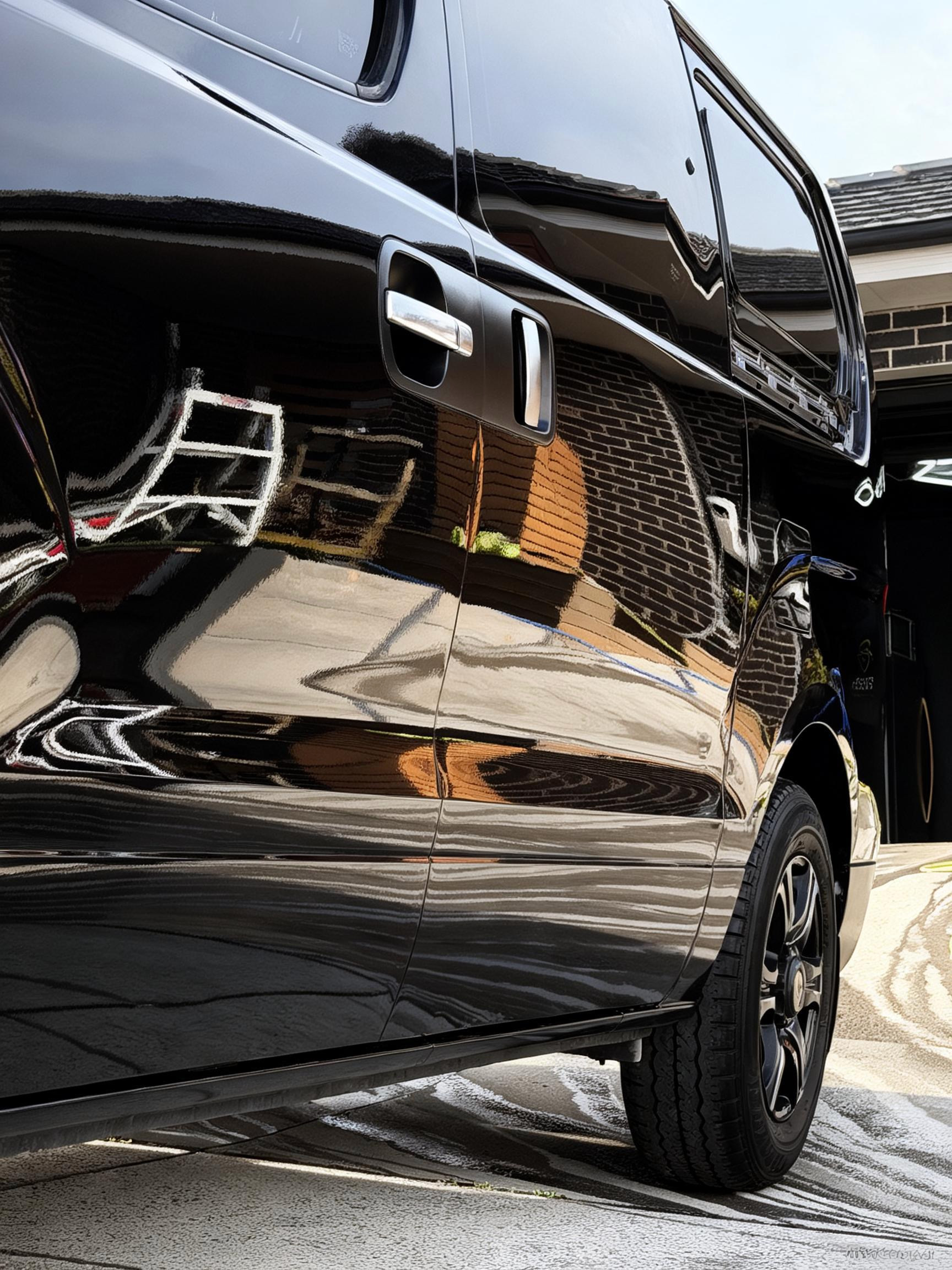
Wash marring describes very fine abrasion in the uppermost portion of a vehicle’s clear coat. It is often grouped with swirl marks, although the two are not always identical. Swirl marks usually appear as circular or arcing patterns under direct light, while wash marring may look like a uniform veil of fine lines or faint scratches following the direction of washing and drying.
Clear coat is designed to protect the coloured basecoat beneath it, but it is not immune to friction. When a wash mitt, drying towel or applicator carries grit across the surface, that grit can score the clear coat. The marks are generally shallow, yet they scatter light rather than reflecting it cleanly. The result is reduced gloss, clarity and depth.
The risk is not limited to visibly dirty vehicles. Road film, brake dust, pollen, mineral residue and fine airborne contamination can all sit on paintwork. In Canberra and surrounding NSW, dry conditions and dusty roads can leave a surprising amount of abrasive material on a vehicle between washes. A quick wipe of a dusty bonnet may feel harmless, but it is one of the easier ways to create fine paint defects.
Why a careful wash can still mark paint
The most common cause is friction before contamination has been safely removed. If the initial rinse is rushed, the wash mitt is asked to deal with particles that should have been loosened and carried away with water first. Shampoo provides lubrication, but it cannot make trapped grit non-abrasive.
Wash media also matters. A clean, quality microfibre or lambswool mitt can hold contamination away from the paint more effectively than a worn sponge or heavily soiled cloth. Once the media is loaded with grit, however, its original quality matters less. It needs to be rinsed thoroughly or replaced before it continues across the vehicle.
Drying is another frequent source of wash marring. Water left on the paint can carry fine residue, while a towel that has touched the ground, a dirty ledge or an unclean boot can transfer contamination straight back onto the finish. Pressing hard to dry quickly increases friction. On softer paint systems, even a good towel used with poor technique can leave visible marks over time.
Automatic brushes, dusty wash bays and unsuitable quick-detail sprays can add to the problem, but wash marring is not always caused by one obvious event. More often, it is cumulative. A series of ordinary washes gradually builds enough fine abrasion for the paint to lose its crisp reflection.
Ceramic coating does not make paint scratch-proof
A professional ceramic coating can make washing easier by improving water behaviour and reducing how firmly some grime adheres to the surface. It can also add a sacrificial layer between the environment and the factory clear coat. Those are meaningful preservation benefits.
It does not, however, remove the need for sound wash technique. A coating can still be marred if abrasive particles are rubbed across it, and a coating that has accumulated wash damage will no longer present with its best gloss and clarity. The aim is to combine an appropriate coating with maintenance methods that respect the finish underneath.
A safer process to reduce wash marring
The best wash is not necessarily the longest one. It is the one that removes contamination in the right order and minimises unnecessary contact with the paint.
Start with cool panels wherever possible. Washing a hot vehicle can cause water and shampoo to dry too quickly, leaving residue and making the process harder to control. Begin with a thorough pre-rinse, paying particular attention to lower doors, sills, wheel arches, the rear of the vehicle and other areas that collect heavier road film.
A suitable pre-wash product can then help soften traffic film before contact washing. This stage is valuable because it removes some contamination without physically wiping the paint. Wheels and tyres should be handled with dedicated tools and separate buckets or media. Brake dust and road grime from wheels have no place in a wash mitt used on painted panels.
For contact washing, use a lubricating pH-neutral shampoo and clean water. Work from the upper panels down, as the roof, glass and upper doors are usually less contaminated than the lower bodywork. Rinse the mitt regularly and use light, controlled passes rather than firm circular scrubbing. Let the wash solution and the fibres of the mitt do the work.
Drying should receive the same care as washing. A filtered air blower is useful for mirrors, grilles, badges and panel gaps, where trapped water can later run onto a clean surface. For the remaining water, use a freshly laundered, high-quality drying towel and pat or glide it gently across the paint with adequate drying aid if required. If a towel is dropped, retire it from paintwork until it has been properly washed.
The process is simple in principle, but its effectiveness relies on clean equipment. Reusing towels that contain embedded dirt, storing mitts while damp, or washing detailing towels with household lint-producing fabrics can undermine otherwise careful technique.
When washing will not restore the gloss
A thorough wash and decontamination can remove bonded fallout, tar, mineral residue and other surface contamination that makes paint feel rough or look dull. It cannot remove wash marring that sits within the clear coat. In fact, repeated attempts to scrub away the apparent haze can make it worse.
This is where paint correction becomes relevant. Paint correction uses measured machine polishing techniques to refine a controlled amount of the clear coat and reduce visible defects. Depending on the vehicle’s paint condition, this may involve a paint enhancement to improve overall gloss or a more involved multi-stage correction for heavier swirl marks, scratches, oxidation and water spotting.
The appropriate level of correction depends on paint depth, paint hardness, defect severity, previous work and the owner’s intended use for the vehicle. Not every mark should be chased. A preservation-focused approach weighs visual improvement against retaining as much healthy paint as possible. Deep scratches that can be felt with a fingernail, for example, may be softened substantially without being removed completely.
An inspection is the right place to establish those boundaries. It allows the condition of the finish to be assessed under proper lighting, the paint to be measured where appropriate, and a recommendation to be based on the individual vehicle rather than a fixed package.
Keep the finish looking right between details
The most useful habit is restraint. Avoid dry wiping dust from paint, even when the vehicle only needs a quick tidy before a drive. If the surface is dusty, use a proper wash process or at least enough suitable lubrication and clean microfibre to remove the contamination safely. The same principle applies to bird droppings and insect residue: address them promptly, but do not grind debris into the paint.
For vehicles protected with a ceramic coating, regular maintenance washing helps preserve the coating’s hydrophobic behaviour and keeps contamination from building up. Periodic decontamination may also be needed, particularly where water spotting or industrial fallout is present. Maintenance should be adjusted to how the vehicle is stored, driven and used, not dictated by a calendar alone.
At Forza Auto Studio, vehicle preservation begins by understanding the existing paint condition and how the owner intends to maintain it. A newly corrected finish deserves a wash routine that protects the clarity achieved, while a well-used daily driver may benefit from practical techniques that deliver a strong result without becoming unrealistic to maintain.
A clean car should look cleaner in the light, not merely cleaner from a distance. Treat every wash as part of the preservation process, and the gloss you have invested in has a far better chance of staying visible.