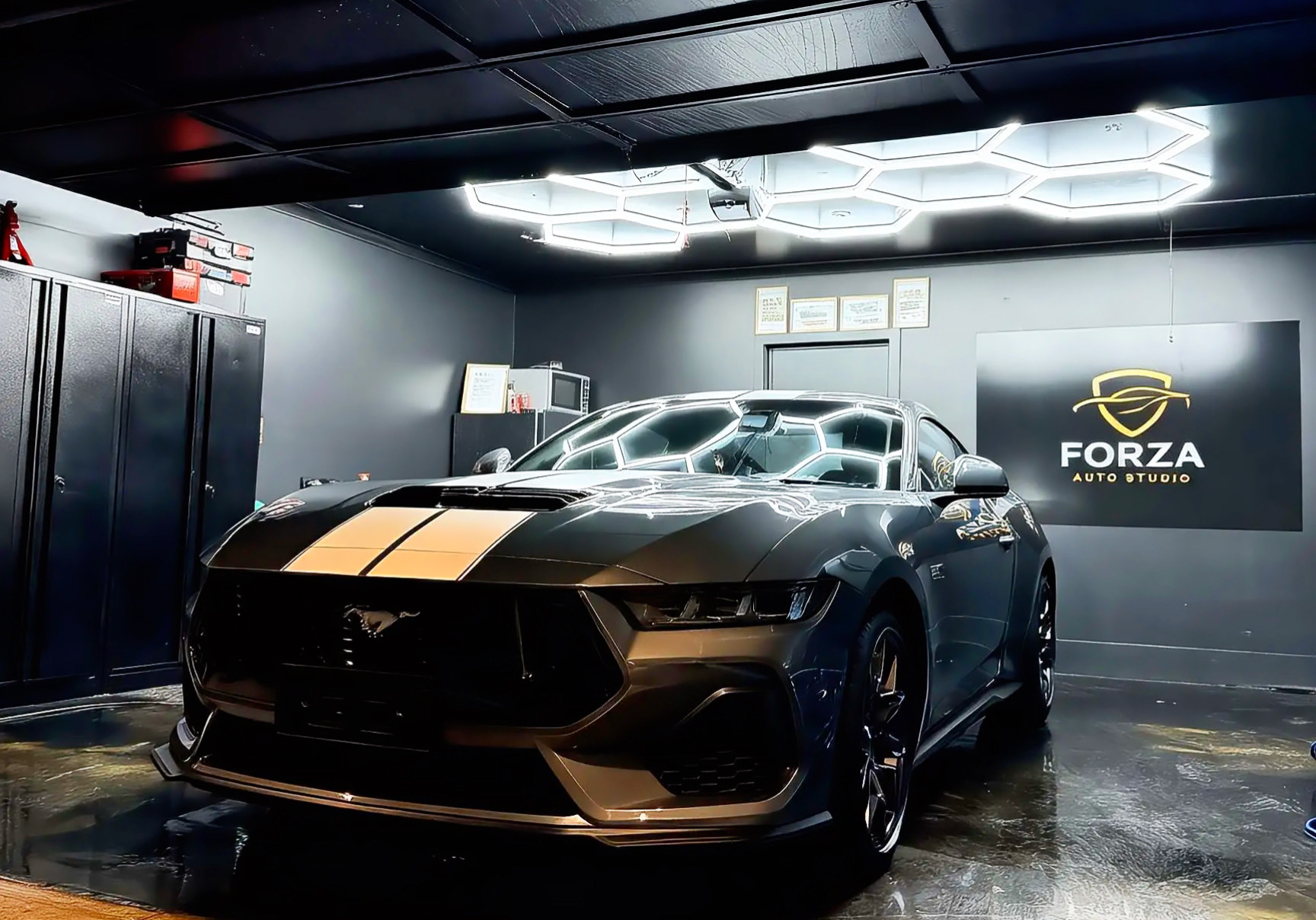
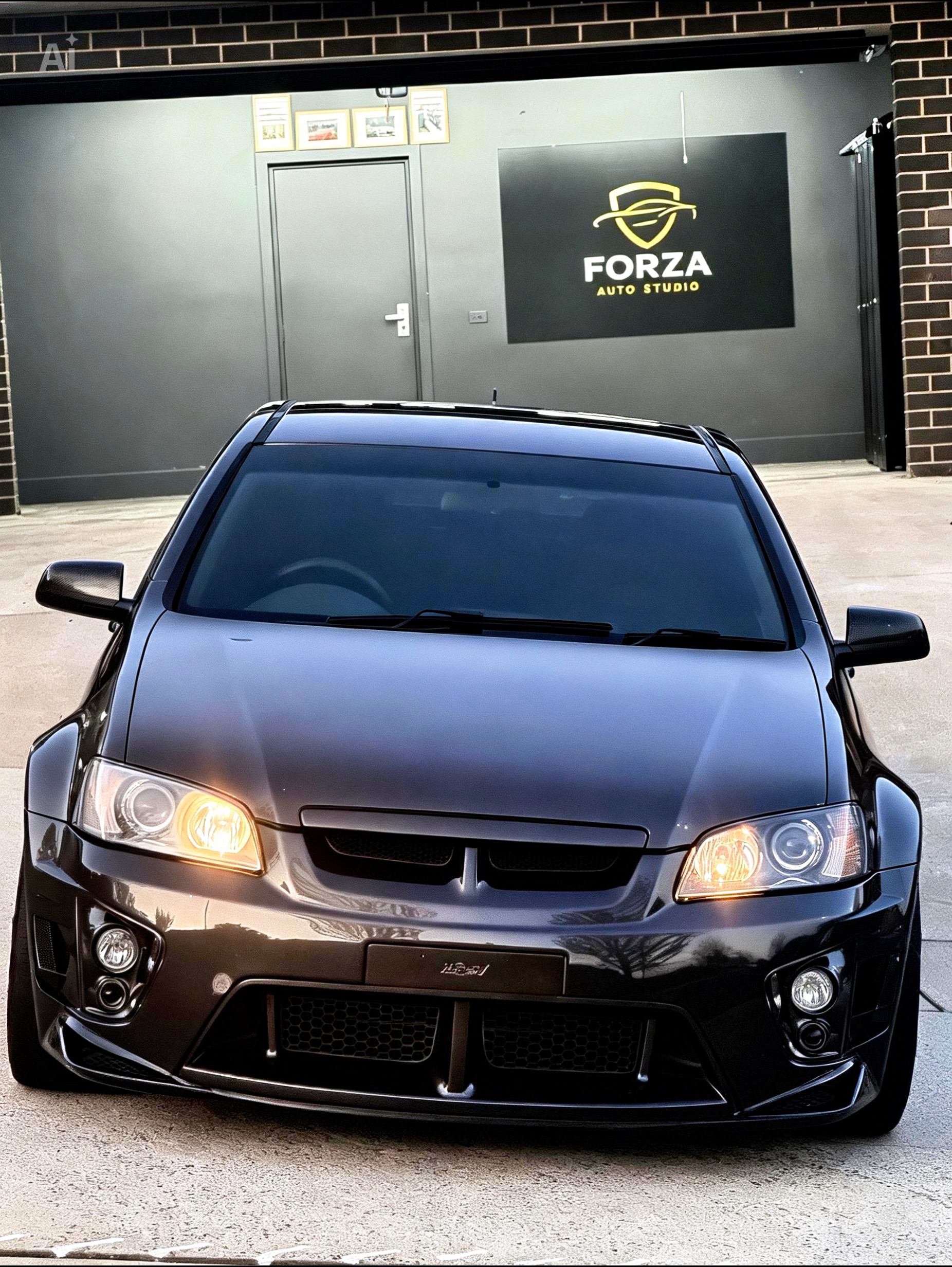
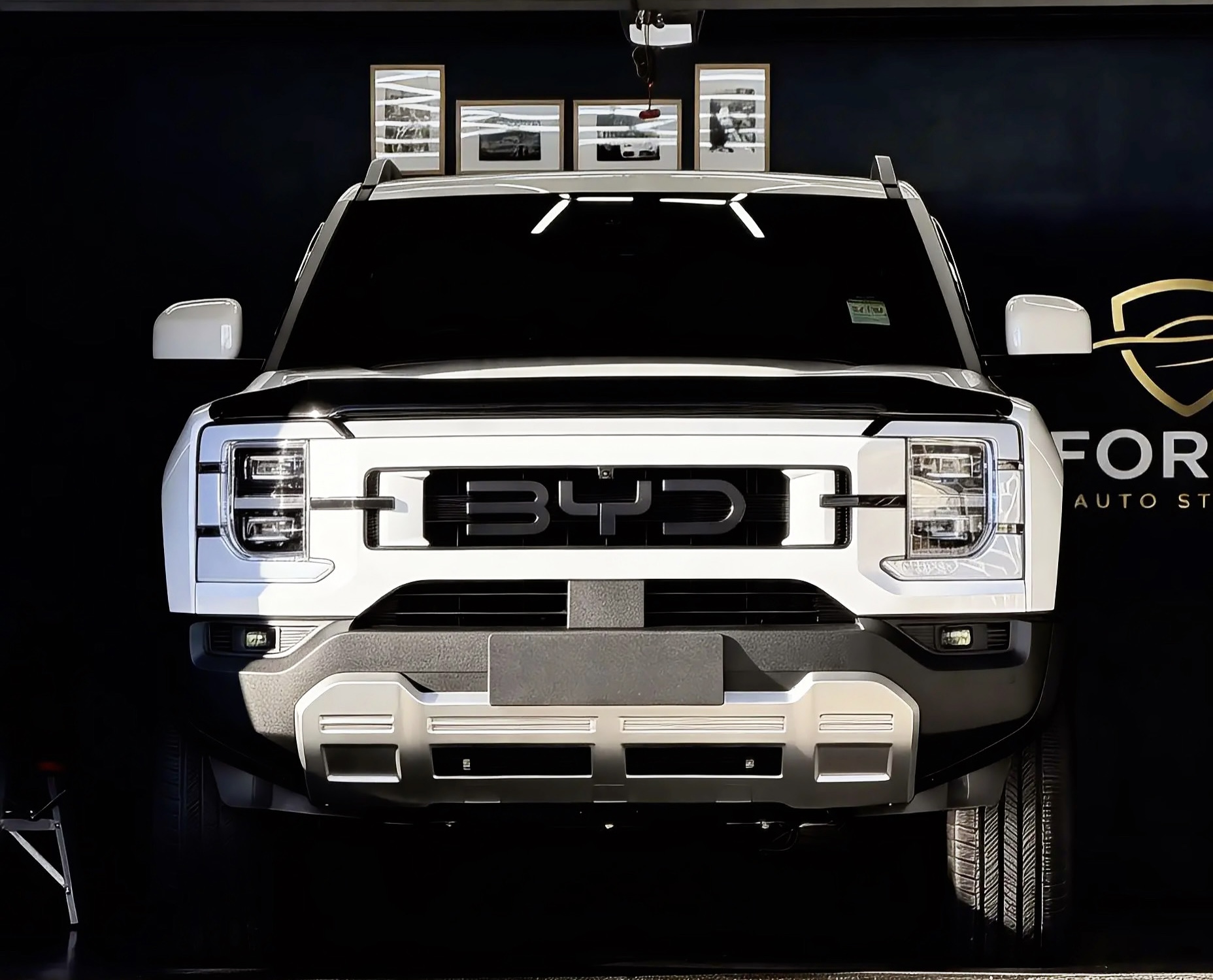
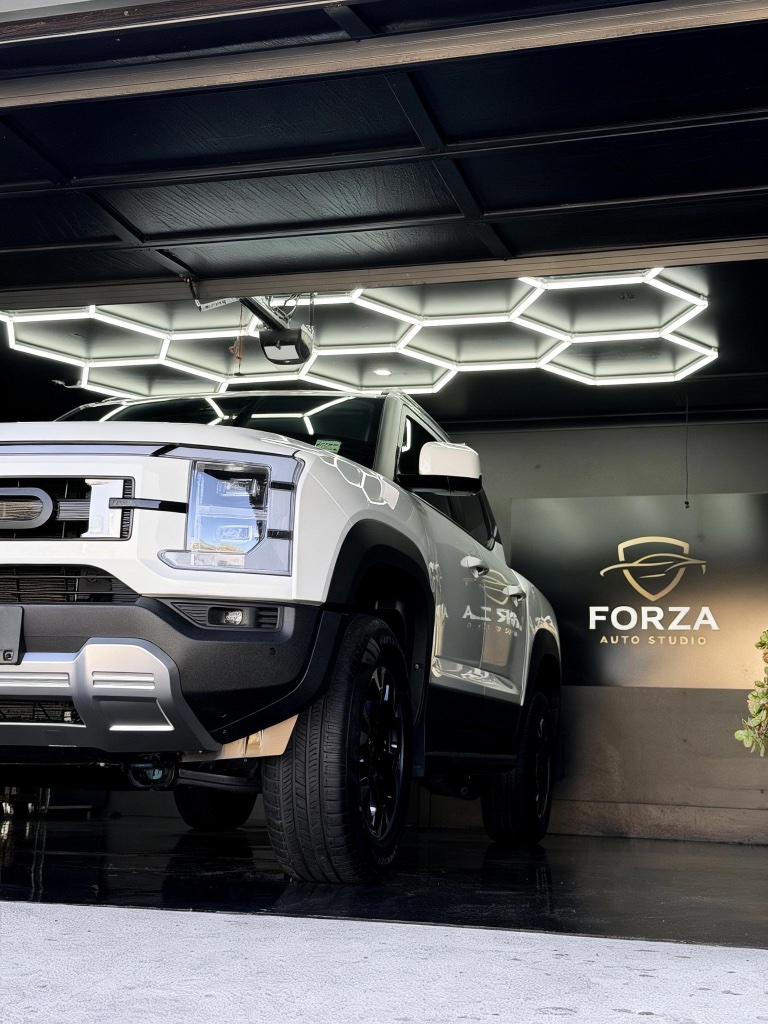

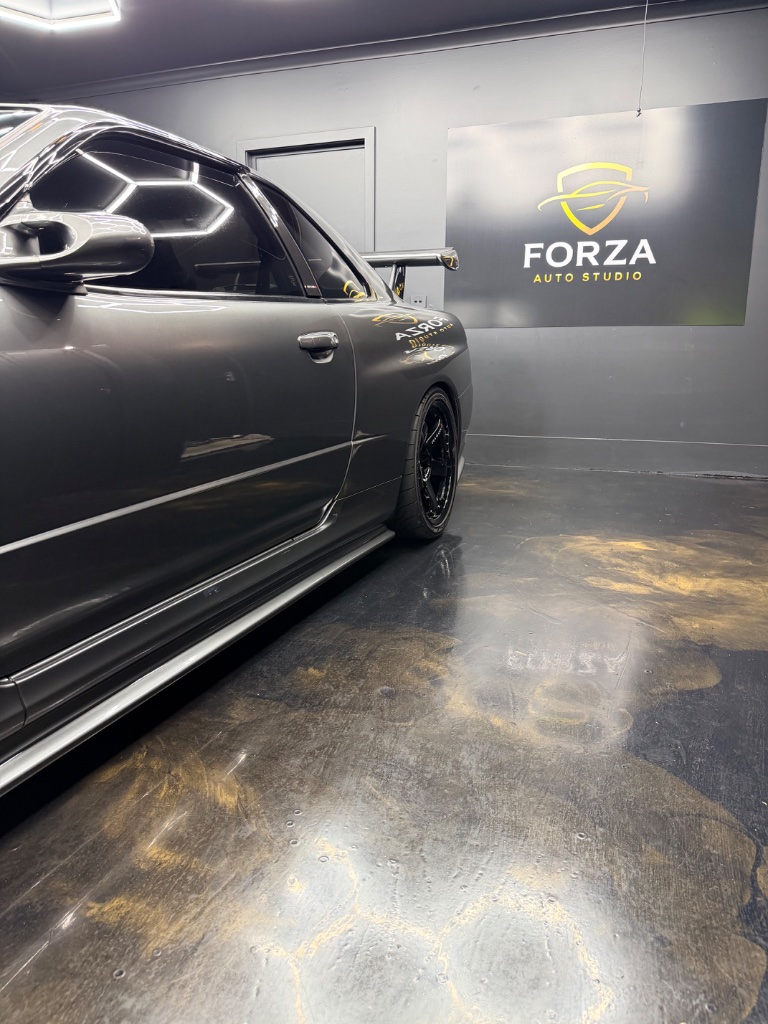
A vehicle can leave the dealership looking new yet already carry light swirl marks, wash marring, bonded contamination or inconsistent gloss. That is why the useful question is not simply what is ceramic coating, but whether the paint beneath it has been properly assessed and prepared first.
What Is Ceramic Coating?
Ceramic coating is a liquid paint-protection product applied to exterior vehicle surfaces, most commonly clear coat, that cures into a thin, durable protective layer. Professional-grade coatings are typically formulated with ceramic-based ingredients such as silica, which create a tightly bonded surface rather than sitting loosely on top of the paint like a traditional wax.
Once cured, the coating changes the surface behaviour of the paint. Water is more likely to bead or sheet away, dirt has less opportunity to cling to the surface, and routine washing becomes easier when correct methods are used. It can also help reduce the impact of UV exposure, road film, bird droppings, insect residue and other environmental contamination that would otherwise sit directly against the clear coat.
A ceramic coating is not a thick shell around the vehicle. It is measured in microns, follows the shape of the panel beneath it, and preserves the condition and appearance of whatever it is applied over. If the paint has swirl marks, scratches, water spotting or haze, those defects remain visible unless they are addressed through paint correction beforehand.
What Ceramic Coating Changes on Your Vehicle
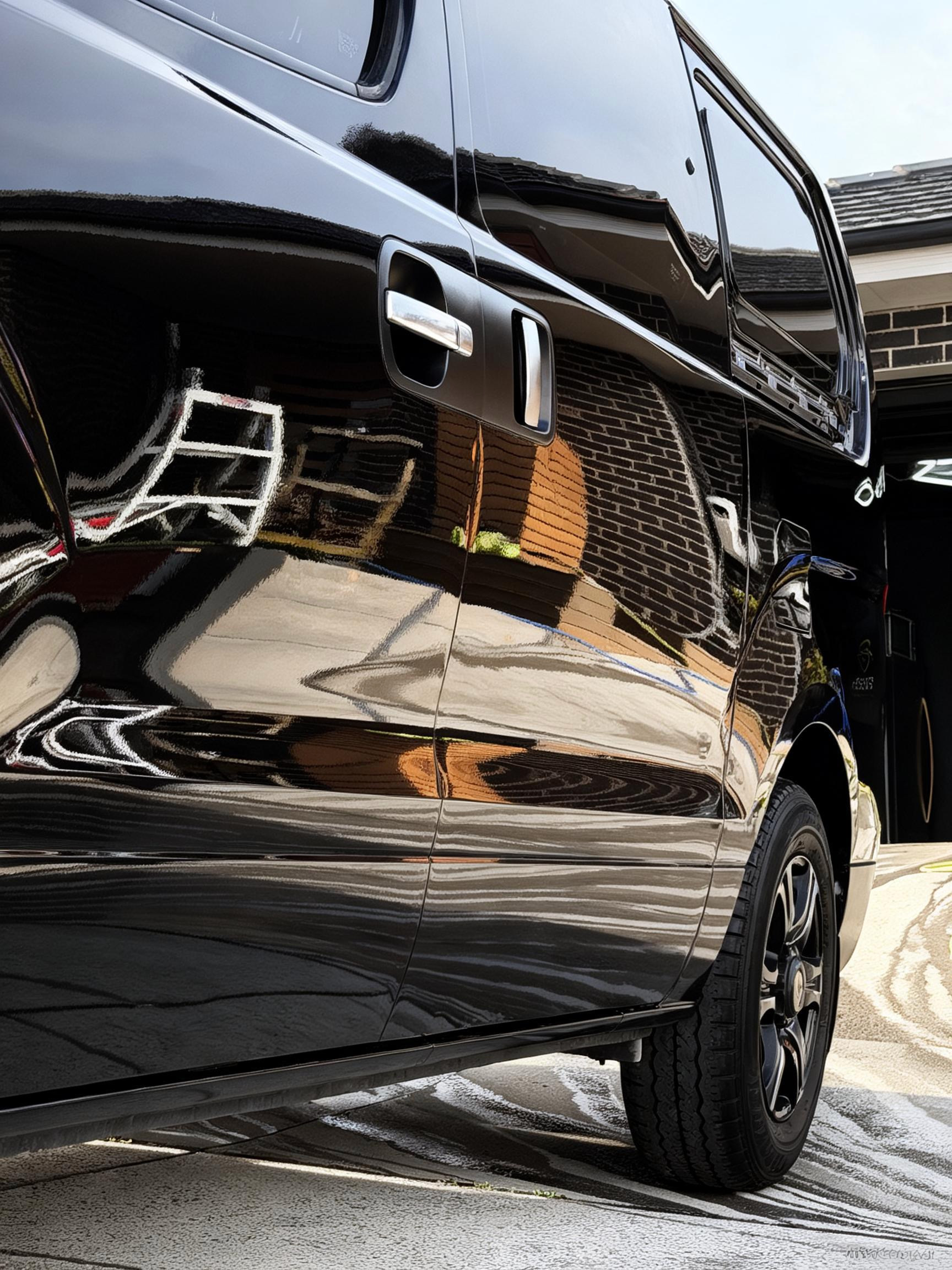
The most noticeable benefit is usually the finish. On well-prepared paint, a quality ceramic coating can heighten gloss, improve perceived depth and make the colour appear cleaner and more defined. Dark paint often benefits noticeably, but the effect is not limited to black, grey or deep metallic colours. White and silver vehicles can gain a sharper, clearer look too, particularly once bonded contamination and dullness have been removed.
The practical benefit is easier maintenance. A coated surface is generally less receptive to grime and can be washed with less effort than an unprotected one. This does not mean the vehicle stays clean indefinitely. Canberra roads, rain, dust, tree sap and daily use will still leave their mark. The difference is that contamination is less likely to bond as aggressively, provided it is removed in a sensible timeframe.
Ceramic coatings can also be selected for surfaces beyond paint. Wheels, exterior plastics and glass may each benefit from purpose-suited protection, although they should not be treated as an automatic add-on for every vehicle. Wheel design, driving conditions, storage and the owner’s maintenance habits all affect whether coating these areas is worthwhile.
What a Ceramic Coating Cannot Do
Clear expectations are central to long-term vehicle preservation. Ceramic coating is protective, but it is not scratch-proof, chip-proof or maintenance-free.
It will not prevent damage from stone impacts, careless contact, deep scratches or abrasion from dirty wash mitts. It also cannot stop mineral deposits from drying onto a hot panel or guarantee that water spots will never form. In some cases, aggressive water spotting can affect the coating itself and may require professional decontamination or refinement.
A coating does not repair paint defects. If a vehicle has wash-induced swirl marks, random deeper scratches, oxidation or etched water spots, applying a coating over them may improve surface behaviour, but it will not restore paint clarity. The defects can become more apparent once gloss is increased.
Nor is a ceramic coating a substitute for safe washing. Automatic brush washes, harsh chemicals, neglected bird droppings and abrasive drying practices can still compromise both the coating and the finish below it. Protection works best as part of a considered maintenance routine, not as permission to stop caring for the paintwork.
Why Preparation Matters More Than the Coating Label
The coating is the final protective step, not the whole process. Before any coating is applied, the vehicle should be inspected for paint condition, previous repair work, contamination, existing protection and the owner’s intended use. A new vehicle may need a lighter paint enhancement, while an older enthusiast car may require multi-stage paint correction to safely reduce more significant defects.
Preparation usually begins with a careful wash and decontamination process. This removes traffic film, iron fallout, tar, embedded contamination and other material that normal washing does not address. The paint can then be properly evaluated rather than judged through a layer of grime or temporary gloss products.
Where appropriate, paint correction is used to reduce visible defects and restore gloss, clarity and depth. This is a controlled process involving suitable polishing combinations, lighting and paint-thickness awareness. The aim is not to chase perfection at the expense of the clear coat. It is to achieve a meaningful, safe improvement that suits the age, condition and preservation goals of the vehicle.
Only after the surface has been refined, panel-wiped and checked should the coating be applied. Application conditions, coverage, levelling and cure time matter. Rushing these stages can affect appearance and performance, which is why a one-vehicle-at-a-time approach is valuable for owners who want careful, accountable workmanship.
Ceramic Coating Compared With Wax and Sealants
Wax, paint sealants and ceramic coatings all serve a similar broad purpose: they add protection and improve the appearance of paint. Their behaviour and service life differ, however.
A traditional wax can give paint a pleasing gloss and is often straightforward to apply, but it generally requires more frequent reapplication. Synthetic sealants tend to offer longer-lasting protection than waxes and can be a practical option for owners who enjoy maintaining their vehicle regularly.
A ceramic coating is chosen when the priority is a more durable, chemically resistant and lower-maintenance protective layer. It can be a sensible long-term option for a daily driver, a cherished weekend vehicle or a newly acquired car that the owner wants to preserve from the outset. That does not make wax or sealant wrong. The right choice depends on the vehicle, how it is stored, how often it is driven and how it will be cared for.
Is Ceramic Coating Right for Every Vehicle?
Not every vehicle needs the same level of correction or protection. A well-maintained daily driver may benefit from a paint enhancement and ceramic coating that makes regular upkeep more manageable. A classic vehicle with thinner or original paint may call for a more conservative correction approach. A car that spends much of its life garaged may place more value on gloss enhancement and ease of cleaning than maximum environmental resistance.
The best recommendation comes after an inspection, not from a fixed package. Paint type, colour, condition, previous coatings, parking arrangements and the owner’s expectations all influence the suitable process. For a new car, this includes checking the finish rather than assuming factory or dealership preparation is defect-free.
In Canberra and surrounding NSW, vehicles can experience strong sun, dust, changing weather and the practical demands of country or city driving. A coating can help make those conditions easier to manage, but it should be selected as part of a broader preservation plan rather than viewed as a once-only solution.
Maintaining a Ceramic-Coated Vehicle
A coated vehicle should still be washed regularly using safe techniques. Start with a thorough rinse to remove loose grit, use clean wash media and dry with suitable towels rather than allowing water to evaporate on the panels. Bird droppings, insect residue, tree sap and heavy road contamination should be removed promptly, especially in warmer weather.
Avoid treating the coating with unnecessarily harsh chemicals or abrasive tools. If water behaviour begins to slow, the cause may be surface contamination rather than coating failure. A professional maintenance clean and decontamination can often restore the coating’s ability to shed water without requiring replacement.
Ongoing care also gives the paintwork a chance to be inspected before minor issues become larger ones. Regular specialist maintenance is less about constant cosmetic work and more about protecting the correction and coating investment already made.
Ceramic coating is best understood as a carefully prepared protective foundation: it preserves a refined finish, simplifies proper maintenance and supports long-term vehicle presentation. The value comes from matching the preparation and protection system to the vehicle in front of you, then caring for it with the same attention after it leaves the studio.